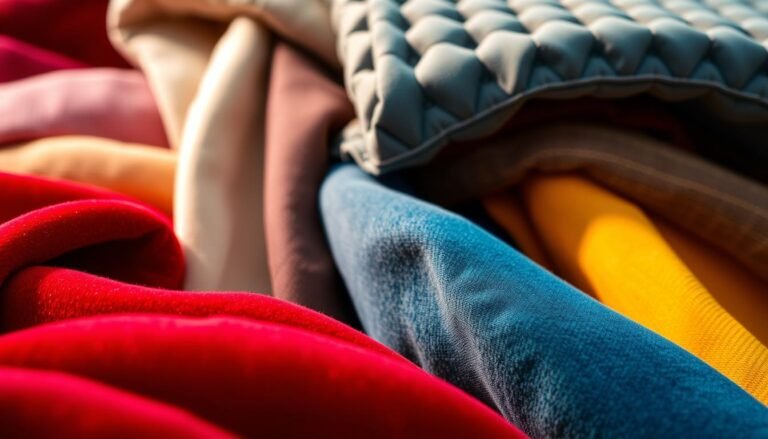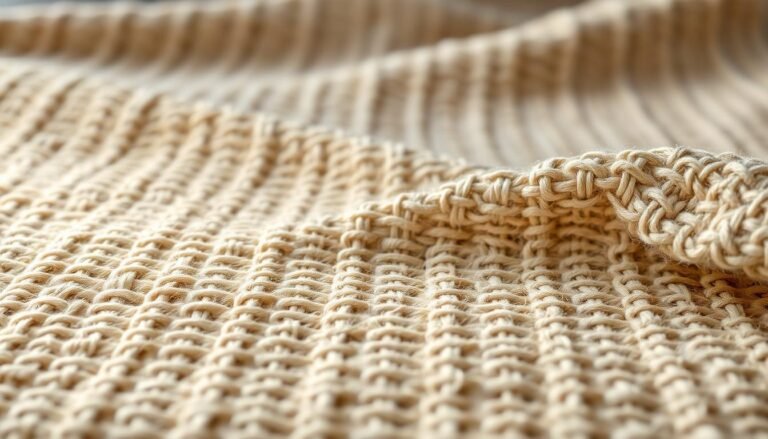


In 2025, AI and smart textile technologies are reshaping the global bedding industry. As a professional mattress fabric manufacturer in China, we integrate AI-driven design, cooling technology, and sustainable materials to deliver next-generation bedding solutions for our cilents
1. Key Transformations Brought by AI to Mattress Fabric Applications
1. From “Material Supplier” to “Data & Service Partner”
AI transforms mattress fabric makers from mere material suppliers into data-driven sleep solution partners.
-
Fabrics become intelligent layers that sense, respond, and self-optimize.
-
We can provide customers not only materials, but also production and sleep-performance data for precision positioning.
→ Impact: Customers purchase an integrated “fabric + intelligence + data service,” not just raw material.
2. From Experience-Based to Data-Driven Quality Decisions
AI-based vision systems and process analytics bring scientific precision to quality control.
-
Previously: manual inspection and subjective judgment caused inconsistencies.
-
Now: AI detects weaving/finishing defects and color deviations in real time.
→ Impact: Customers receive consistently high-quality fabrics, reduced complaints, and shorter lead times.
3. Product Differentiation Shifts from “Look” to “Experience”
AI-assisted design turns fabric into a performance-driven element.
-
Smart fabrics regulate temperature, wick moisture, and even monitor respiration or movement.
-
Brands can build new narratives like “Smart Sleep” or “Health-Aware Bedding.”
→ Impact: Enables premium pricing and clear differentiation in the EU/US markets.
4. Faster Customization & Prototyping
AI design tools and digital twin simulation accelerate development.
-
Customers can visualize and test fabric structures virtually within hours.
-
Regional climate and consumer preference data allow tailored solutions.
→ Impact: Sampling time cut by 70%, boosting responsiveness to fast-changing market trends.
5. Transparent Sustainability & Traceability
AI enables full traceability of materials and carbon footprints.
-
Brands can show the environmental profile of each batch.
-
Complies with upcoming EU Digital Product Passport regulations.
→ Impact: Easier access to premium and certified supply chains in Europe and the US.
2. Main Pain Points Solved by AI Integration
| Pain Point | Traditional Challenge | AI-Based Solution | Direct Benefit |
|---|---|---|---|
| Quality inconsistency | Manual inspection, human errors | Vision + predictive QC | Fewer claims, stable supply |
| Slow product development | Long sampling & testing cycles | AI design + virtual simulation | Faster time-to-market |
| Lack of differentiation | Homogeneous fabrics | Smart & functional features via AI design | Premium branding |
| No feedback loop | No end-user data | Smart fabric + cloud analytics | Continuous product improvement |
| Sustainability pressure | Hard to track materials | Digital traceability & carbon analytics | Easier EU/US compliance |
| High inventory & cost | Poor demand prediction | AI demand forecasting & energy optimization | Lower costs & waste |
3. Overall Benefits and Market Outlook
With AI transformation, mattress fabric customers evolve from passive buyers to co-innovators, gaining:
-
Stable quality and automated inspection
-
Faster innovation and design agility
-
Distinct brand identity through intelligent & functional materials
-
Verified sustainability with traceable eco-data
In the next 3–5 years, “smart + sustainable” will dominate Western bedding markets — and AI-enabled mattress fabrics will be the foundation of this evolution.